Every December I see the same pattern in pet-safety posts: a big scary list of plants, no sense of which ones really matter. I don’t own a dog, so I went to the source. The ASPCA keeps a searchable database of plants, with an entry for each one saying whether it is toxic to dogs, what the toxic part is, and what signs to expect. I read the entries for the plants people most often bring home at the holidays, plus a few common houseplants.
I’m not a vet, and this page isn’t a complete list. The ASPCA dog list is much longer than what I cover here. Use this as a way to know which ones to move and which ones to look up.
The short answer
Several of the best-known holiday plants are listed as toxic to dogs by the ASPCA: poinsettia, holly, American mistletoe and amaryllis. Some common houseplants are too, including aloe, pothos, jade, dieffenbachia and English ivy. The one that stands out as serious is the sago palm, where the ASPCA lists liver failure and death among the signs.
Most of the others mainly cause vomiting, drooling or an upset stomach. The ASPCA also says on the plant database page that eating any plant material may cause vomiting and stomach upset in dogs and cats. So even a “safe” plant isn’t a snack.
Holiday plants
The poinsettia is the one I’d stop worrying about most. The ASPCA lists it as toxic, and its entry says the sap irritates the mouth and stomach, sometimes causing vomiting, but is “generally over-rated in toxicity.” Holly is similar. The entry lists saponins as the toxic principle, with vomiting, diarrhea and depression as signs, and notes that “leaves and berries are low toxicity.”
Mistletoe and amaryllis deserve more respect. For American mistletoe, the ASPCA lists toxic lectins and signs that include vomiting, diarrhea, difficulty breathing and a low heart rate. For amaryllis, it lists lycorine and signs that include vomiting, depression, diarrhea, abdominal pain, drooling and tremors. Tulips are listed as toxic to dogs, and the entry says the highest concentration of the toxin is in the bulb. That matters if you plant bulbs in the fall and your dog digs.
The AVMA’s holiday page adds some plants to its list of those that can be toxic to pets: amaryllis, baby’s breath, sweet William, some ferns and hydrangeas. It also warns that table decorations such as corn cobs, pine cones and gourds can cause choking or blockage if swallowed.
| Plant | ASPCA status for dogs | Toxic principle listed | Signs listed |
|---|---|---|---|
| Poinsettia (Euphorbia pulcherrima) | Toxic | Irritant sap | Irritation of mouth and stomach, sometimes vomiting; “generally over-rated in toxicity” |
| Holly (Ilex opaca) | Toxic | Saponins | Vomiting, diarrhea, depression; leaves and berries low toxicity |
| American mistletoe (Phoradendron species) | Toxic | Toxalbumin (lectins, phoratoxins) | Vomiting, diarrhea, difficulty breathing, low heart rate |
| Amaryllis (Amaryllis species) | Toxic | Lycorine | Vomiting, depression, diarrhea, abdominal pain, drooling, tremors |
| Tulip (bulb most toxic) | Toxic | Tulipalin A and B | Vomiting, depression, diarrhea, drooling |
| Sago palm (Cycas revoluta, Zamia species) | Toxic | Cycasin | Vomiting, black stool, jaundice, bleeding, liver failure, death. All parts are toxic; seeds are the most toxic. Call a vet immediately. |
| Pothos (Epipremnum aureum) | Toxic | Insoluble calcium oxalates | Mouth pain and swelling, heavy drooling, trouble swallowing, vomiting |
| Dieffenbachia | Toxic | Calcium oxalates, enzyme | Burning mouth irritation, drooling, vomiting, trouble swallowing |
| Aloe vera | Toxic | Saponins, anthraquinones | Vomiting, lethargy, diarrhea |
| Jade plant (Crassula argentea) | Toxic | Unknown | Vomiting, depression, incoordination |
| English ivy (Hedera helix) | Toxic | Triterpenoid saponins | Vomiting, abdominal pain, drooling, diarrhea |
| Azalea (Rhododendron species) | Toxic | Grayanotoxin | Vomiting, diarrhea, weakness, cardiac failure |
| Lily of the valley (Convallaria majalis) | Toxic | Cardenolides | Vomiting, irregular heartbeat, low blood pressure, coma, seizures |
| Christmas cactus (Schlumbergera bridgesii) | Non-toxic | None listed | None listed |
| Spider plant (Chlorophytum comosum) | Non-toxic | None listed | None listed |
Houseplants
The sago palm is the one to take seriously. The ASPCA lists the toxic principle as cycasin and the signs as vomiting, melena (black, tarry stool) and jaundice, plus greater thirst, bleeding in the gut, bruising, clotting problems, liver damage or failure, and death. The Merck Veterinary Manual adds that all parts of the plant are considered toxic and the seeds are the most toxic part, that early signs can appear within about 4 hours, and that the outlook is worse when treatment is delayed. If your dog has chewed or swallowed any part of a sago palm, call your vet, an emergency clinic or the ASPCA Animal Poison Control Center at (888) 426-4435 immediately, even if your dog seems fine.
Pothos and dieffenbachia contain insoluble calcium oxalates, according to the ASPCA. The signs are irritation and pain in the mouth, tongue and lips, swelling, heavy drooling, trouble swallowing and vomiting. Aloe vera is listed as toxic to dogs for its saponins and anthraquinones, with vomiting, lethargy and diarrhea. Azaleas list grayanotoxin and a longer set of signs, including weakness and cardiac failure. Jade plant is listed as toxic with an unknown toxic principle, and signs of vomiting, depression and incoordination. English ivy lists triterpenoid saponins, and the ASPCA says the foliage is more toxic than the berries.
Lily of the valley is on the ASPCA dog list too. Its entry lists cardenolides and signs including vomiting, irregular heart beat, low blood pressure, disorientation, coma and seizures. That’s a garden plant more than a houseplant, but it shows up in holiday and spring bouquets.
Plants the ASPCA lists as non-toxic to dogs
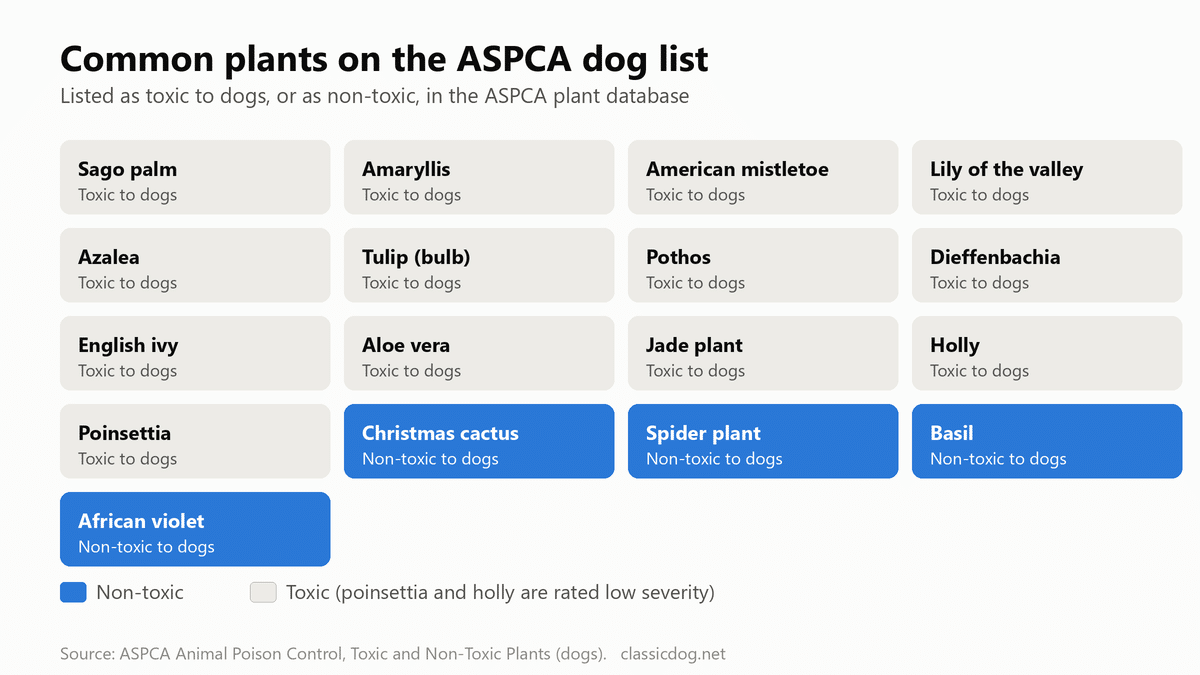
Not everything is a hazard. The ASPCA lists Christmas cactus, spider plant, basil and African violet as non-toxic to dogs. That’s useful if you want to swap a risky plant for a safe one. It doesn’t mean a dog should chew them, and a large mouthful of any plant can still upset a stomach. Also check the exact plant: the ASPCA database separates plants by common and scientific name, and some similar-sounding plants are different species. For example, the ASPCA lists “mistletoe cactus” as a different plant from American mistletoe.
What to do if your dog chews a plant
- Take the plant away and keep a piece, or a photo of the whole plant including the label.
- Call your veterinarian, or ASPCA Poison Control at (888) 426-4435. A consultation fee may apply.
- Tell them the plant’s name, how much you think was eaten, when, and your dog’s weight.
- Don’t wait for signs. The AVMA says signs that something might be wrong include sudden behavior changes, depression, discomfort or pain, vomiting and diarrhea, but the sago palm case shows serious problems are possible.
Practical advice
Put anything on the toxic list where the dog can’t reach it. Sago palms and amaryllis bulbs are better out of the house if you have a dog that chews. Check the plant name before you buy a bouquet, because arrangements often hold three or four species. Keep fallen leaves and berries swept up, since a plant on a high shelf can still drop something onto the floor. For holiday food hazards, see my Thanksgiving foods guide and the Halloween candy guide.
Sources
- ASPCA. Toxic and Non-Toxic Plant List: Dogs. aspca.org
- ASPCA. Toxic and Non-toxic Plants: Sago Palm, Poinsettia, Amaryllis, Holly, Aloe, Pothos, Azalea, Tulip, English Ivy, Jade Plant, Christmas Cactus, Dieffenbachia, Spider Plant (individual entries). aspca.org
- ASPCA. Toxic and Non-toxic Plants: Mistletoe “American”. aspca.org
- ASPCA. Toxic and Non-toxic Plants: Lily of the Valley. aspca.org
- Merck Veterinary Manual. Houseplants and Ornamentals Toxic to Animals (sago palm). merckvetmanual.com
- American Veterinary Medical Association. Thanksgiving pet safety. avma.org
Last reviewed: November 12, 2026. Written by Santosh Mahajan. This page summarizes the ASPCA plant database and isn’t veterinary advice. If your dog has eaten a plant, call your vet or ASPCA Poison Control at (888) 426-4435. See the Disclaimer and the Editorial Policy.