Thanksgiving is the one day a year when the whole table is within reach of a dog’s nose, and plenty of well-meaning guests will slip a bite under it. I don’t own a dog, so I can’t tell you what mine does at dinner. What I can do is read what the veterinary groups say and put it in one place before the holiday.
I’m not a vet. This page summarizes guidance from the American Veterinary Medical Association (AVMA), the ASPCA and the Merck Veterinary Manual. If your dog eats something on the “no” list, skip this page and call your vet.
The short answer
The AVMA’s advice is blunt: “Fatty foods are hard for animals to digest,” poultry bones can damage the digestive tract, and holiday sweets can contain poisons. Its one green light is plain, boneless, skinless turkey in small portions. Almost everything else on the plate, from gravy to dressing to the skin, is where the trouble starts.
The safest default is the dog’s normal food. If you want a rule you can repeat to guests, mine is a deliberately cautious one: if the dog gets anything from the table, make it a small piece of plain, boneless, skinless, fully cooked turkey, and nothing else. That’s my choice, not the sources’ exact rule. The ASPCA, for example, also suggests that small amounts of plain sweet potato or green beans can go in a dog’s regular meal, and I cover that below.
What’s safe, careful or no
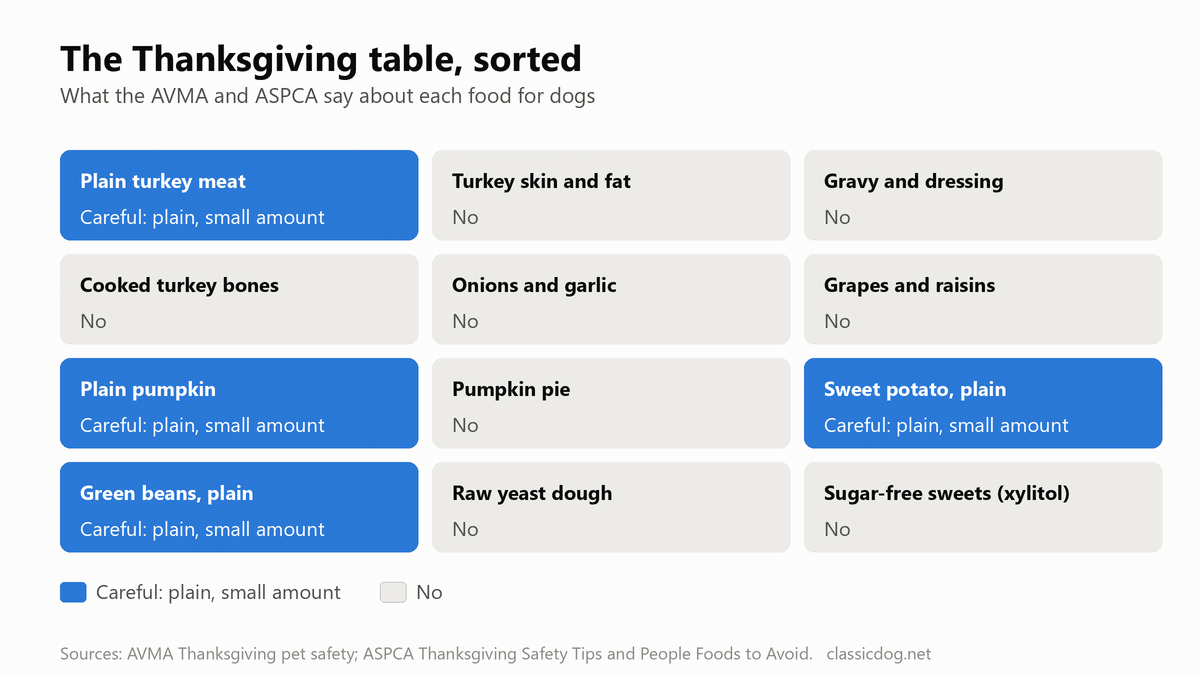
The table below sorts common Thanksgiving foods using the AVMA and ASPCA pages listed in the sources. “Careful” means the source allows it only in plain, small amounts. I haven’t invented any quantities, because neither group gives a gram amount for a Thanksgiving treat. If your dog has a health problem, ask your vet before sharing anything.
| Food | Verdict | What the sources say |
|---|---|---|
| Plain turkey meat (boneless, skinless, fully cooked) | Careful | AVMA: generally safe in small portions. ASPCA: boneless and fully cooked. |
| Turkey skin, fat, gravy, sauces, dressing | No | AVMA: hard to digest, and sometimes even a small amount can cause pancreatitis. |
| Cooked turkey bones | No | AVMA: choking or intestinal blockage. ASPCA: poultry bones are a choking hazard. |
| Raw or undercooked turkey | No | ASPCA: may carry salmonella. |
| Onions and garlic | No | ASPCA: toxic. Can damage red blood cells and cause anemia. |
| Grapes and raisins | No | ASPCA: can lead to kidney damage. AVMA: poisonous to pets. |
| Plain pumpkin (small pieces) | Careful | AVMA: small pieces can be a healthy snack. |
| Pumpkin pie and other desserts | No | AVMA: pie can contain ingredients toxic to animals. |
| Plain sweet potato, plain green beans | Careful | ASPCA: small amounts mixed into the regular meal. |
| Chocolate and sugar-free baked goods (xylitol) | No | AVMA and ASPCA: chocolate is harmful and xylitol can be deadly. |
| Raw bread dough with yeast | No | ASPCA and AVMA: bloating, painful gas, and alcohol from the yeast. |
| Macadamia nuts | No | ASPCA: weakness, tremors and vomiting in dogs. |
| Alcohol | No | ASPCA: vomiting, incoordination and worse; absorbed quickly. |
Why the fatty foods matter
The AVMA says that gravy, sauces, dressing, and meat or poultry fat or skin can be hard for pets to digest, and that “sometimes even a small amount can cause pancreatitis.” The Merck Veterinary Manual explains the other half. Pancreatitis, an inflammation of the pancreas, is the most common disease of that organ in dogs, and for most cases no specific cause is found. But Merck says eating trash, large amounts of table scraps, or other inappropriate food is believed to be a common risk factor.
The signs Merck lists in severe cases are loss of appetite, vomiting, weakness, abdominal pain, dehydration and diarrhea. Milder cases may show few signs. Treatment is veterinary care, and a hospital stay may be needed. That’s why the skin and gravy aren’t harmless “just this once” treats. I’d rather not put my own dog, if I had one, through that.
The trash can is part of the meal
The AVMA tells owners to put turkey carcasses, bones and related trash in a tightly secured bag, inside a closed container outdoors or behind a securely closed door. The ASPCA says the same thing from a different angle: empty the trash through the day, or keep pets out of the area, because bones, chocolate and onions end up in there. A kitchen bin with a lid isn’t much of a barrier to a determined dog, so I’d take the bag out of the house.
The hidden ingredients
Turkey can cause trouble too, through fatty skin, gravy and bones, which is why the AVMA limits it to plain, boneless, skinless meat in small portions. But much of the danger is in what’s mixed into everything else. Here are the ones the sources name.
- Onions and garlic. The ASPCA says Allium plants can irritate the gut and damage red blood cells, which can lead to anemia. They’re in a lot of stuffing and gravy.
- Grapes and raisins. The ASPCA says exposure “can lead to kidney damage,” and the AVMA lists them among foods that are poisonous to pets. Check the salad and the stuffing.
- Xylitol. This sweetener appears in sugar-free baked goods. The AVMA says it can be deadly to dogs, and the ASPCA says it can cause low blood sugar and liver damage. I covered it in the Halloween candy guide.
- Raw yeast dough. The ASPCA says it can rise in the stomach and cause painful bloating and alcohol poisoning. The AVMA also warns about painful gas and dangerous bloating.
- Bouillon cubes. The ASPCA says they’re very high in sodium, which can cause stomach problems and seizures.
- Macadamia nuts and other nuts. The ASPCA says macadamias can cause weakness, tremors and vomiting in dogs. Other nuts are high in fat and could set off pancreatitis.
What to do if your dog gets into something
The AVMA says to call your veterinarian or a local emergency clinic right away. You can also call ASPCA Poison Control at (888) 426-4435 or the Pet Poison Helpline at (855) 764-7661, and the AVMA notes that a fee may apply. Signs it lists as warning signs are sudden behavior changes, depression, discomfort or pain, vomiting and diarrhea. If you’re not sure how much was eaten, say so on the phone. Don’t wait to see if the dog “seems fine.”
For chocolate, my chocolate toxicity calculator can help you describe what was eaten, but it doesn’t replace a call.
Safer ways to include your dog
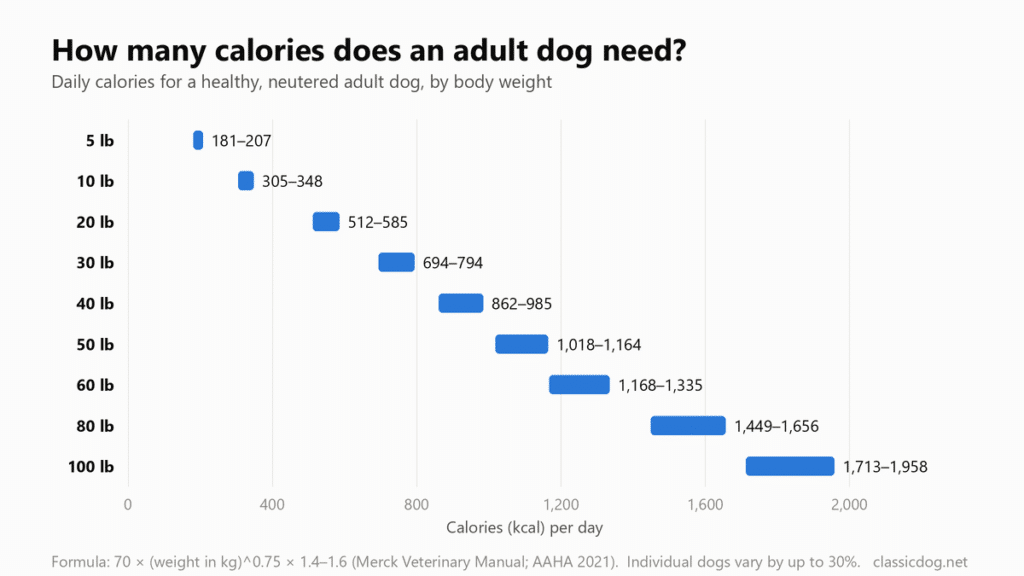
The AVMA suggests making or buying a treat made just for dogs. The ASPCA suggests mixing small amounts of plain turkey, sweet potato or green beans into your dog’s regular meal, or giving a puzzle toy to keep a dog busy. Keep the dog on its normal diet that day. If you’re wondering how many calories your dog needs, the dog food calculator gives a daily estimate you can work around.
A few other holiday points from the AVMA are worth repeating. Give nervous dogs a quiet room or crate, watch the door while guests arrive, and make sure the microchip information is current. Decorations such as corn cobs, pine cones and gourds can cause choking or blockage if swallowed.
Sources
- American Veterinary Medical Association. Thanksgiving pet safety. avma.org
- ASPCA. Thanksgiving Safety Tips. aspca.org
- ASPCA. People Foods to Avoid Feeding Your Pets. aspca.org
- Steiner JM. Pancreatitis and Other Disorders of the Pancreas in Dogs (last updated December 2024). Merck Veterinary Manual, Dog Owners edition. merckvetmanual.com
Last reviewed: November 12, 2026. Written by Santosh Mahajan. This page summarizes published guidance and isn’t veterinary advice. If your dog has eaten something it shouldn’t, call your vet or ASPCA Poison Control at (888) 426-4435. See the Disclaimer and the Editorial Policy.